The Most Common Myths About Massage
One massage won't undo a problem that's been building for years, the spot that hurts isn't always the spot to work on, and a tense body simply doesn't take massage the way a relaxed one does. Plus: how few people in Pančevo actually get massages regularly.
Massage is one of those things almost everyone has an opinion about and very few have real experience with, which is why a fair number of myths have built up around it. They might seem harmless, but they’re the exact reason people walk in with the wrong expectations, leave disappointed, and give up before they’ve seen what massage can actually do.
Here are the ones we hear most often at the studio.
”One massage will sort this out”
This is probably the most common one. Someone comes in with pain they’ve carried for two years, has one session, walks out feeling lighter - and expects that to be the end of it. When part of the tension creeps back a week later, they conclude that the massage “didn’t help”.
The truth is the exact opposite: it did help. It just couldn’t erase in one hour what took years to build.
When a problem has been around for a long time, it isn’t just one tight muscle. It’s an entire pattern - how you sit, which shoulder your bag hangs on, the shoulder that climbs toward your ear when you’re stressed, the hip that stiffened up until the rest of your body started compensating for it. Your body has built a new, poor balance around that problem and learned to function inside it. Breaking down that pattern requires consistency, not just one intense session.
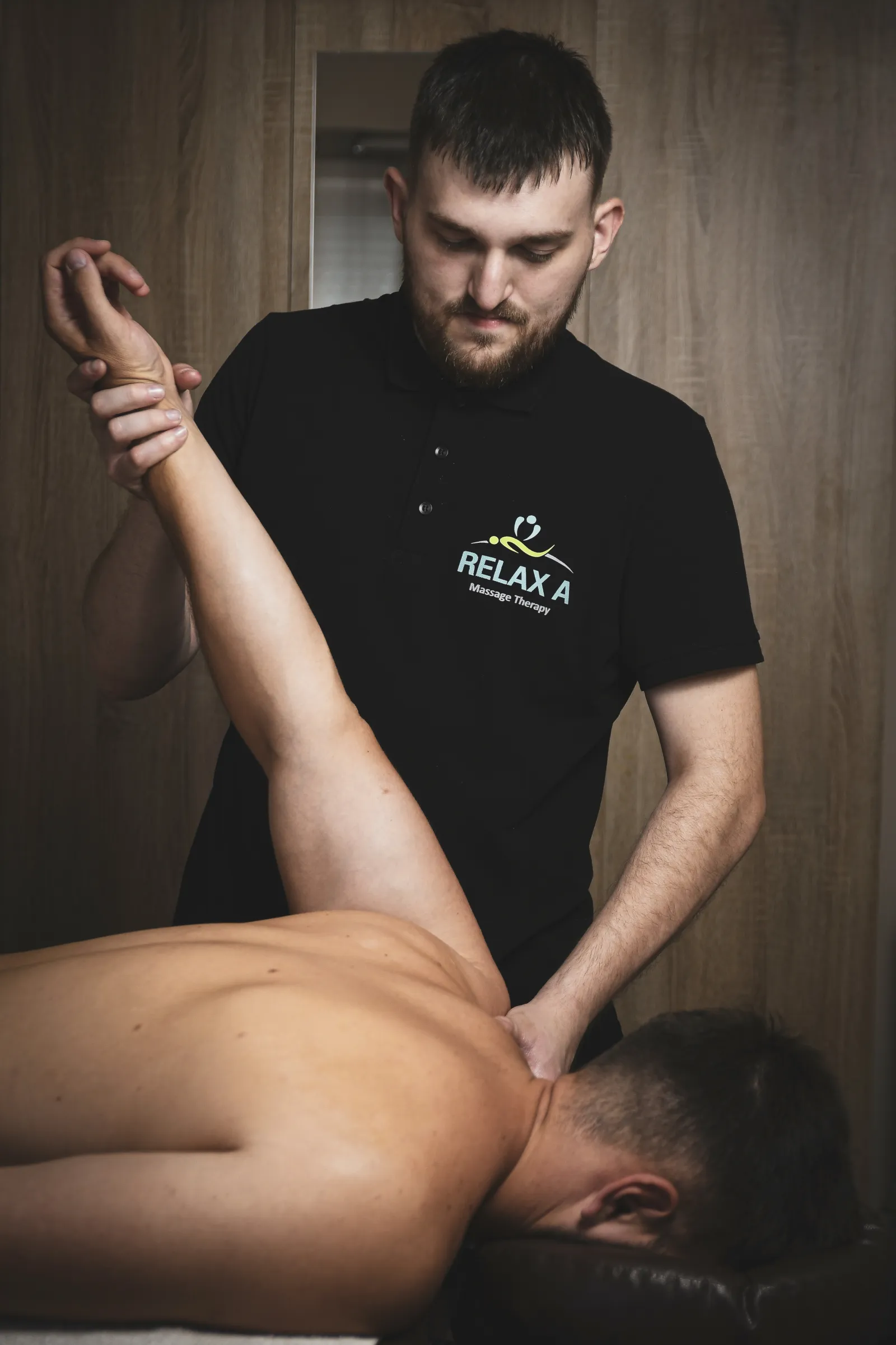
That’s why a first visit here is diagnostic. Through conversation and hands-on assessment, we find where the tension is strongest and where it’s actually coming from, and build a plan from there. After that, you know exactly what to expect and roughly how many sessions it will take, instead of just hoping “this time will be enough”.
”Just my shoulder hurts, skip the rest”
The second myth, and perfectly reasonable at first glance: it hurts here, so work here.
The catch is that the painful spot often isn’t where the trouble began. The body is a connected system, and tension moves through it. A stiff hip forces your lower back to take on work that isn’t its job. Shortened chest muscles pull a shoulder forward, and what you feel is an ache between the shoulder blades - in the muscles that are simply trying to hold that shoulder in place. Work only the shoulder blades and the pain eases for a day, then comes back, because nobody touched the true cause.
That is why therapeutic work looks at the whole body, even when most of the hour goes to one specific area. This isn’t about giving you “more massage for the same money” - it’s a physiological fact that a painful spot can’t be freed for long while everything pulling on it stays tight.
Partial treatments absolutely have their place. A 30-minute back massage is great when you already know what’s going on and you’re just maintaining. But when a problem keeps coming back, a partial approach will only give you a partial result.
”It has to hurt to work”
Somewhere along the way, the idea took hold that a good massage leaves you unable to move for days. It doesn’t.
When pressure goes past what your body can take, the muscle defends itself and tightens. The therapist is then working against that bracing rather than through it - you spend the hour for nothing and leave with bruises and a body on guard. Some treatments are intense by nature, deep tissue for instance, and you’ll feel the work in the deeper layers. But “intense” and “painful enough to grit your teeth” aren’t the same thing, and it’s worth saying so out loud during the session.
Massage works best when you’re relaxed
This is the flip side of the same story, and probably the most useful piece of advice in this entire text.
Massage isn’t something done to a body that waits passively. The result is always a collaboration - and a tense person gets noticeably less out of it, no matter how good the therapist is. If you arrived in a rush, your head is still at work, your body is clenched from the cold, or you’re braced waiting to find out whether the pressure will be too much, your muscles stay slightly defensive the whole time and open up far more slowly.
This is why the studio pays so much attention to things that seem unrelated to technique: a warm room, total quiet, no rush, and no overlapping appointments.
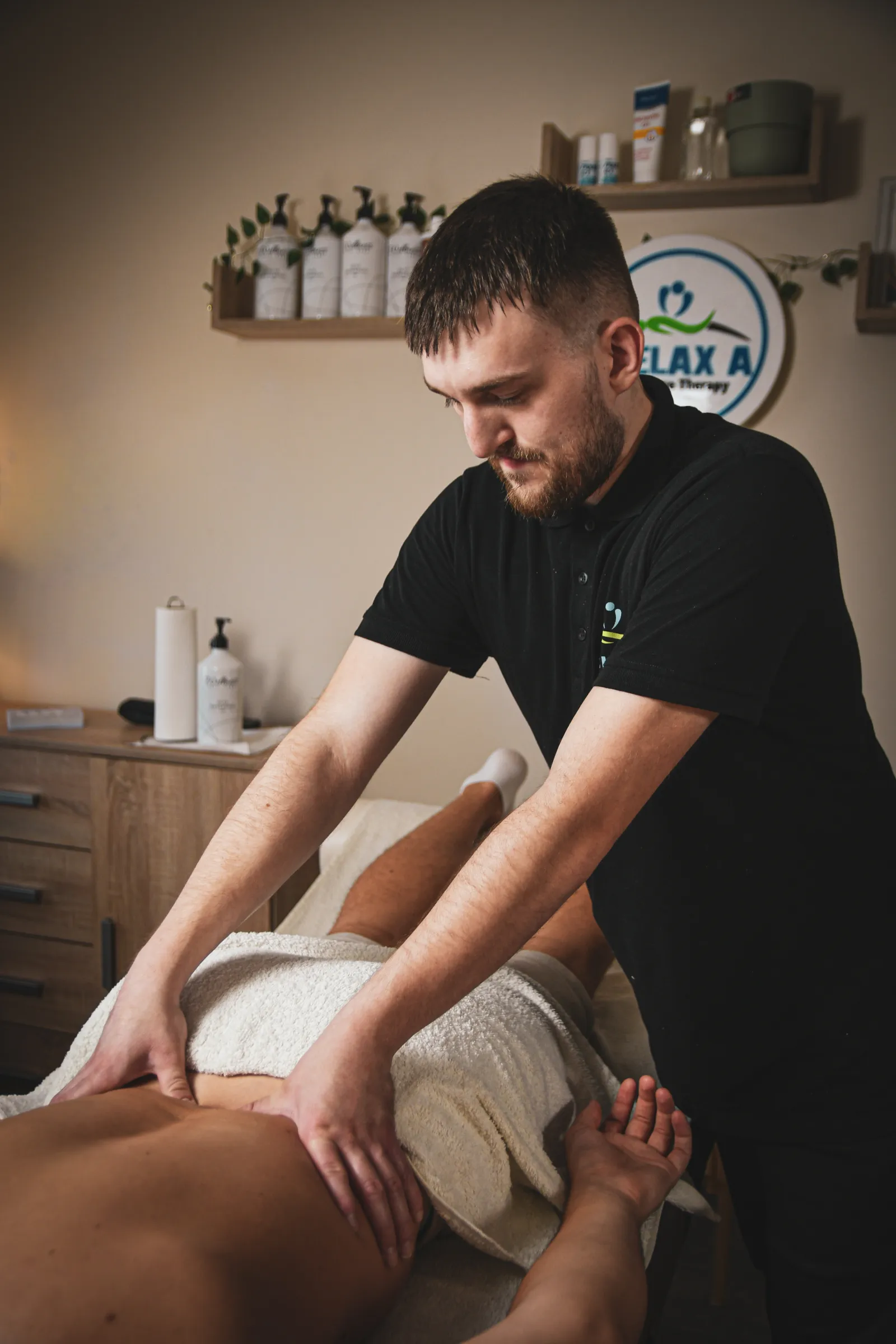
You can help yourself too. Come a few minutes early, without the rush and without your phone in your hand, and give your body a moment to settle before the session starts. Breathe slowly and deeply during the massage - muscles let go on the exhale, all by themselves. If the pressure is too much or too light, say so. And try not to schedule a meeting straight afterwards; your body needs a little time to process and keep what it was just given.
That state of mind decides whether you leave the exact same session feeling rested or simply processed.
The biggest myth: massage as a luxury rather than a habit
All of this shares one common denominator. Massage is mostly treated as something you treat yourself to once it already hurts, rather than something you do regularly so it doesn’t get to that point.
The numbers show it. By our estimate, between 0.5% and 0.9% of people in Pančevo get a massage regularly - once a month or more often. That’s fewer than one in a hundred. Meanwhile, you’d struggle to find one person in a hundred with absolutely no back, neck, or shoulder pain, now or in the past year.
That gap is the whole story. For most people, tension accumulates for years, until it stops feeling like a problem that could be solved and starts feeling like “that’s just how I am”.
Regularity changes more than anything else - more than which treatment you choose or how long a single session runs. When you come in regularly, each session picks up where the last one left off, instead of starting from scratch every time. Once a week is ideal; if that isn’t realistic, twice a month is a perfectly solid rhythm. To make coming back worthwhile, every visit is recorded on your Loyalty card - your 3rd massage gets +5 minutes of treatment time, your 5th gets a 500 RSD discount, and your 10th massage is completely free.

If you believed otherwise until now
None of these myths are silly - they’re all logical, and most people offering them meant well. But each one leads to the same outcome: people come once, expect too much of that single visit, get less out of it than they could have, and leave concluding that massage “just doesn’t work for them”.
Every treatment here is performed by Andrija Zeljković - certified massage therapist (WAPF academy), wellness SPA therapist, and certified hijama therapist. A first visit always starts with a conversation before any technique is applied: what’s been going on, what you’ve tried, and what’s realistic to expect.
If something has been bothering you for a while, come in and let’s look at where it’s coming from. We make no promises that one session will fix it magically - but you will leave with a clear plan for how it gets fixed.
Enjoyed this article?
Share it with friends or book your appointment in Pančevo.