What Are the Benefits of Hijama?
What hijama does in the body, the benefits of dry and wet hijama, and the next lunar days suitable for a treatment in Pančevo.
Hijama is one of the oldest therapies still in use today, and the question we get most often is not what it looks like, but what it actually does. This is the answer.
If you have come across it under another name - hidžama, cupping or vacuum therapy - it is the same thing. Cups are placed on the skin to create suction, and that suction is the entire mechanism.
What hijama actually does in the body
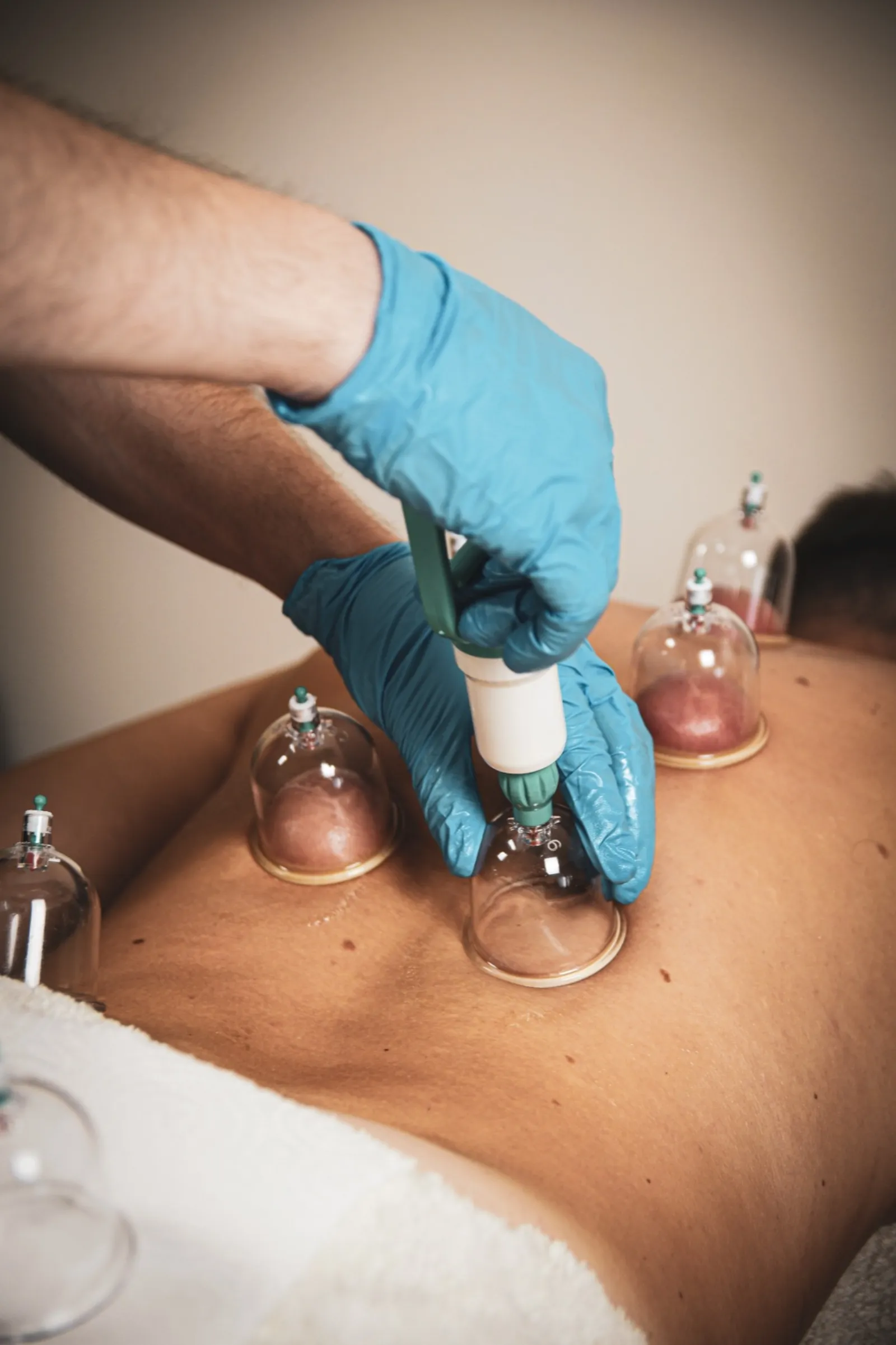
Almost every massage technique works by pressing down. Hijama does the opposite: the vacuum lifts the skin and the tissue beneath it upward. That difference explains why it feels unlike anything else, and why it reaches layers that hands struggle to get to.
Lifting the tissue sets three things in motion at once. Circulation increases in the treated area, as the blood vessels in the skin and underlying tissue dilate. Deep muscle tension gives way, because the tissue is being separated rather than compressed. And the lymphatic system is stimulated - it has no pump of its own and depends on movement and outside encouragement.
Which is why people tend to describe the same things afterwards: relief across the back and shoulders, easier breathing, and the sense that something which had been sitting there for days has finally let go.
Benefits of dry hijama
Dry hijama is the variant with no incisions at all. The cups go on, do their work, and come off. The treatment lasts 60 minutes and is completely painless.
- Stimulates circulation in the treated areas
- Releases deep muscle tension that does not give way to ordinary massage
- Stimulates the lymphatic system
- No incisions - no recovery, no aftercare
- Performed by a certified hijama therapist using sterile equipment
This is the variant for anyone trying hijama for the first time. Also for people with deep muscle tension and poor circulation, athletes looking for a different way to speed up recovery, and anyone who does not get on with firmer massage techniques - because dry hijama does not need heavy pressure to work.
Benefits of wet hijama
Wet hijama is the full, traditional variant. Once the cups are placed, controlled superficial incisions are made to draw a small amount of blood from the treated areas. It also lasts 60 minutes.
- A traditional method with a long history and a clearly defined procedure
- Sterile single-use equipment - without exception, for every client
- Performed by a certified hijama therapist, a member of the Serbian Hijama Therapists Association
- Individual health assessment before the treatment
- Detailed recovery guidance afterwards
It is most often chosen by people who already have experience with dry hijama and want a stronger effect, and by those who follow the therapy for religious, cultural or traditional reasons.
Dry or wet - how to choose
If you are not sure, the answer is almost always dry. It covers what most people come for - tension, circulation, that heaviness across the back - and asks nothing of you afterwards.
Wet hijama is a deliberate choice, not the next level everyone has to graduate to. If you choose it, you choose it because you know what you are after.
Either way, the treatment starts with a conversation. With wet hijama that conversation is more detailed, because there are conditions under which it is not performed.
When to come: the lunar days
In the hijama tradition, treatment is tied to particular days in the lunar cycle, and many clients plan their appointments around exactly that. We track those days and announce them in advance.
The next suitable days:
- 28 September
- 30 September
- 2 October
The previous cycle covered 30 August, 1 September and 3 September.
Those slots fill faster than the rest, so if it matters to you that the treatment falls on one of them, get in touch a few days ahead. Hijama works outside those days too - this is a matter of tradition, not a condition for the therapy to be effective.
Safety is not a detail
With hijama, the equipment is the whole story. Cups, blades and gloves are sterile and single-use, opened only moments before you, and discarded afterwards. Nothing is ever reused, on any client, without exception.
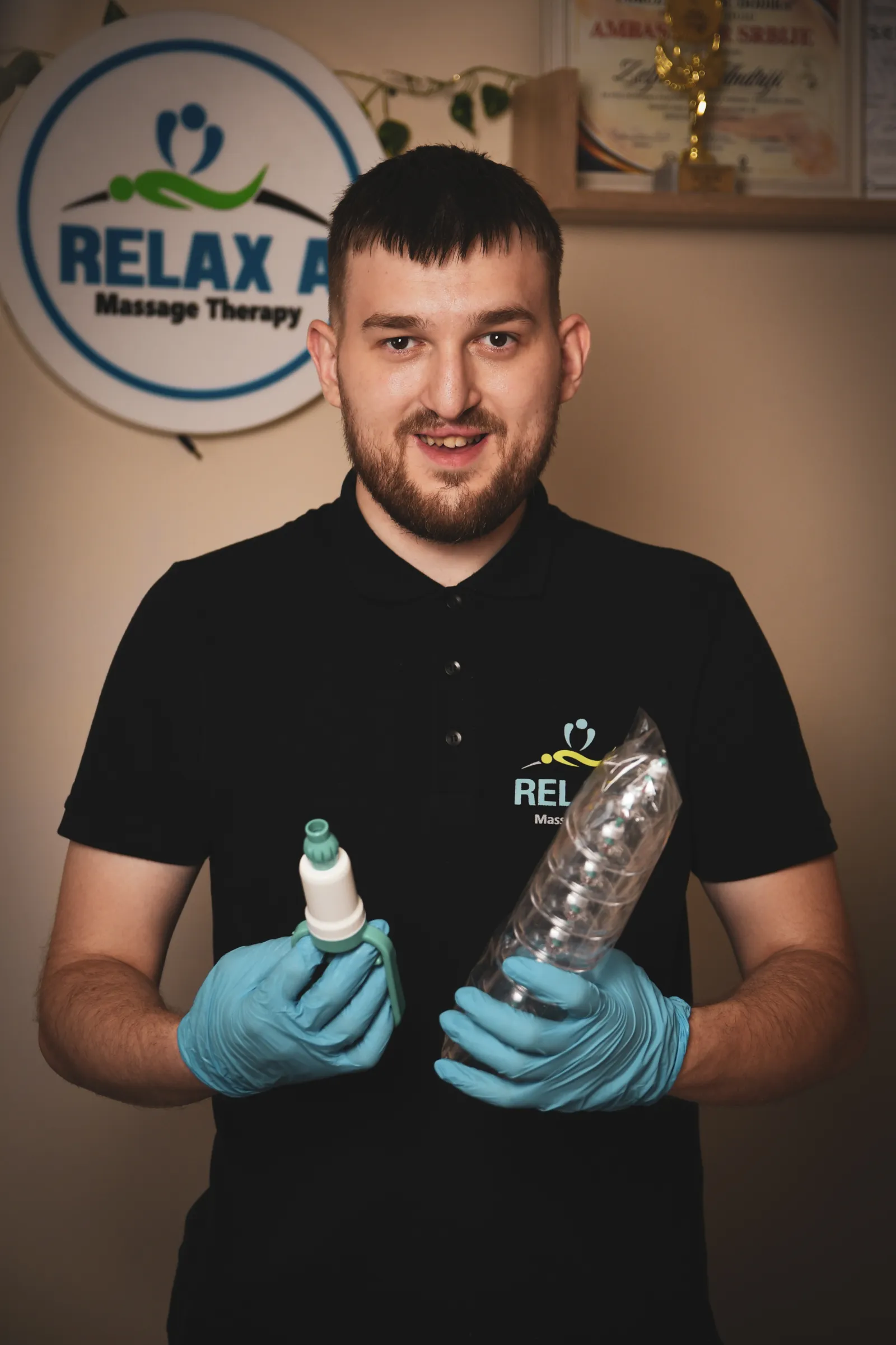
The treatment is performed by Andrija Zeljković - a massage therapist trained at the WAPF academy, a wellness and SPA therapist and a certified hijama therapist, member of the Serbian Hijama Therapists Association.
And one thing worth saying plainly: hijama is a traditional therapy and sits well alongside looking after your body, but it does not replace a medical diagnosis or the treatment your doctor has prescribed. If you have a chronic condition or take medication that affects blood clotting, tell us before the treatment.
Booking
Dry and wet hijama are both offered at our studio in Pančevo, each lasting 60 minutes. If you are wondering which would suit you better, get in touch - a short conversation settles it faster than any amount of reading.
Book an appointment or give us a call, especially if you are aiming for one of the upcoming lunar days.
Enjoyed this article?
Share it with friends or book your appointment in Pančevo.